Rosaries and crucifixes
Numerous rosary beads, or prayer beads, have been found in archaeological excavations. Although prayer beads appeared in the Islamic religion as early as the 8th century, it was only in the 11th century that the rosary started to be used in Christianity. Initially, the rosary had 150 beads and was used to pray 150 Our Father prayers; it was known as the Pater Noster cord. In the 13th century, rosaries began to be used to pray the Hail Marys, gradually becoming the most common form of devotion to the Virgin Mary. The practice of praying the rosary was primarily spread by the Dominican order. Rosaries were made of bone, glass, glass paste, wood and black amber or jet – a highly polished type of coal, the function of which was to protect against spells and misfortunes. Rosary beads were used to pray simple prayers, which made it possible for the illiterate population to incorporate faith into everyday life more easily.
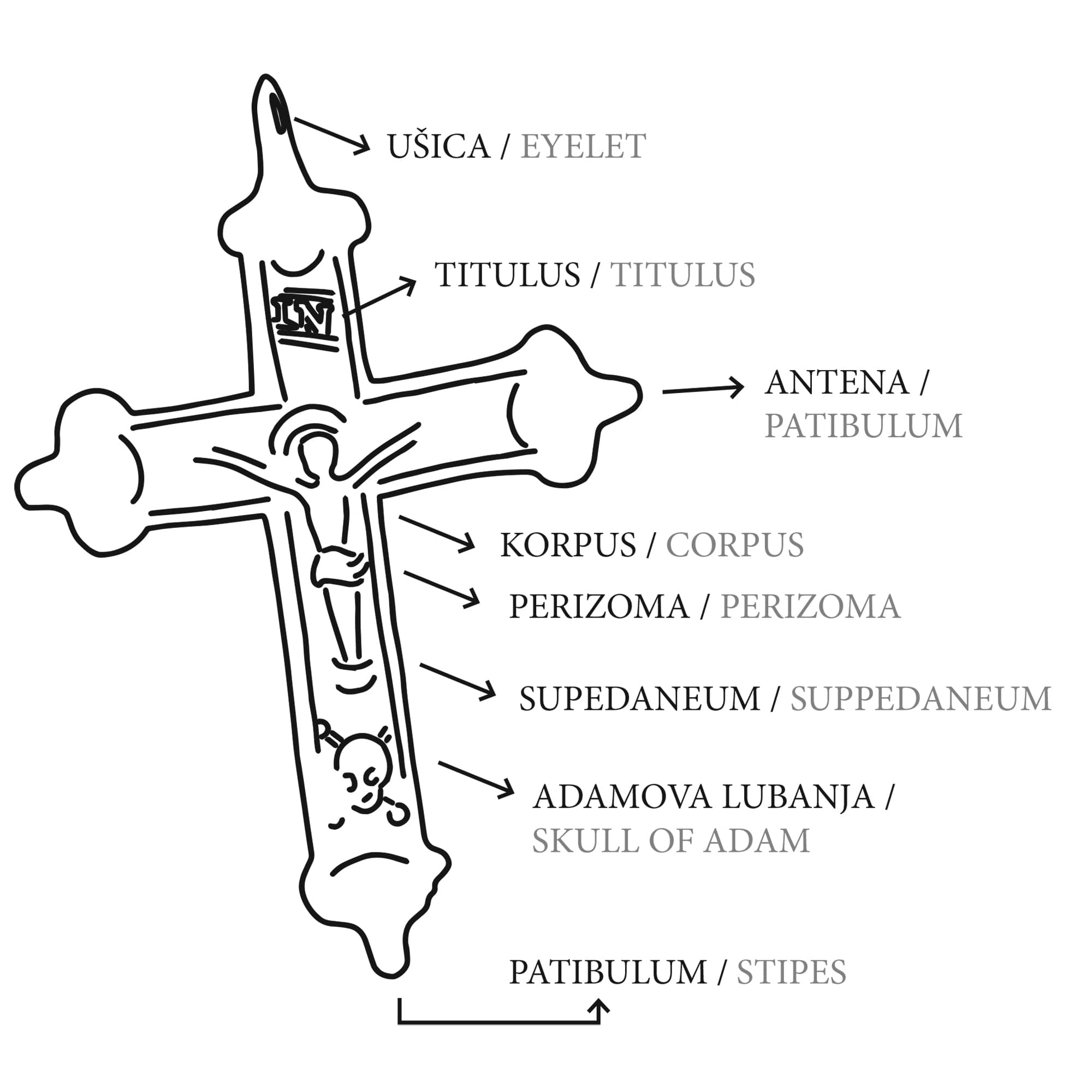
The cross is the most widespread and recognisable symbol of Christianity today. In antiquity, it was used as a torture device, and since Christ was crucified and died on it in Christian faith, the cross became a symbol of glory. There are many types of crosses, the most common being the simple Latin cross. In the Baroque period, the caravaca cross, with two cross bars, was also popular and was used to protect against the plague, severe weather or demonic possession. The image of the crucified Christ began to appear on crosses in the 13th century. Crosses were worn as pendants around the neck or as part of rosaries, and a wooden cross with the crucified Christ would be put into a dead person’s hand before the funeral.
Crosses often bear inscriptions, one of which is: Domine memento mei – Lord, remember me.
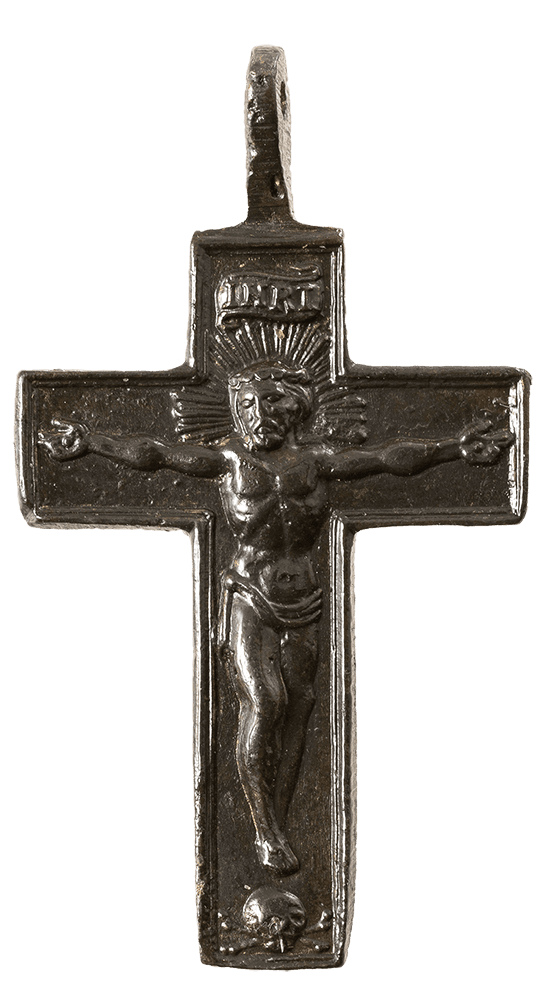
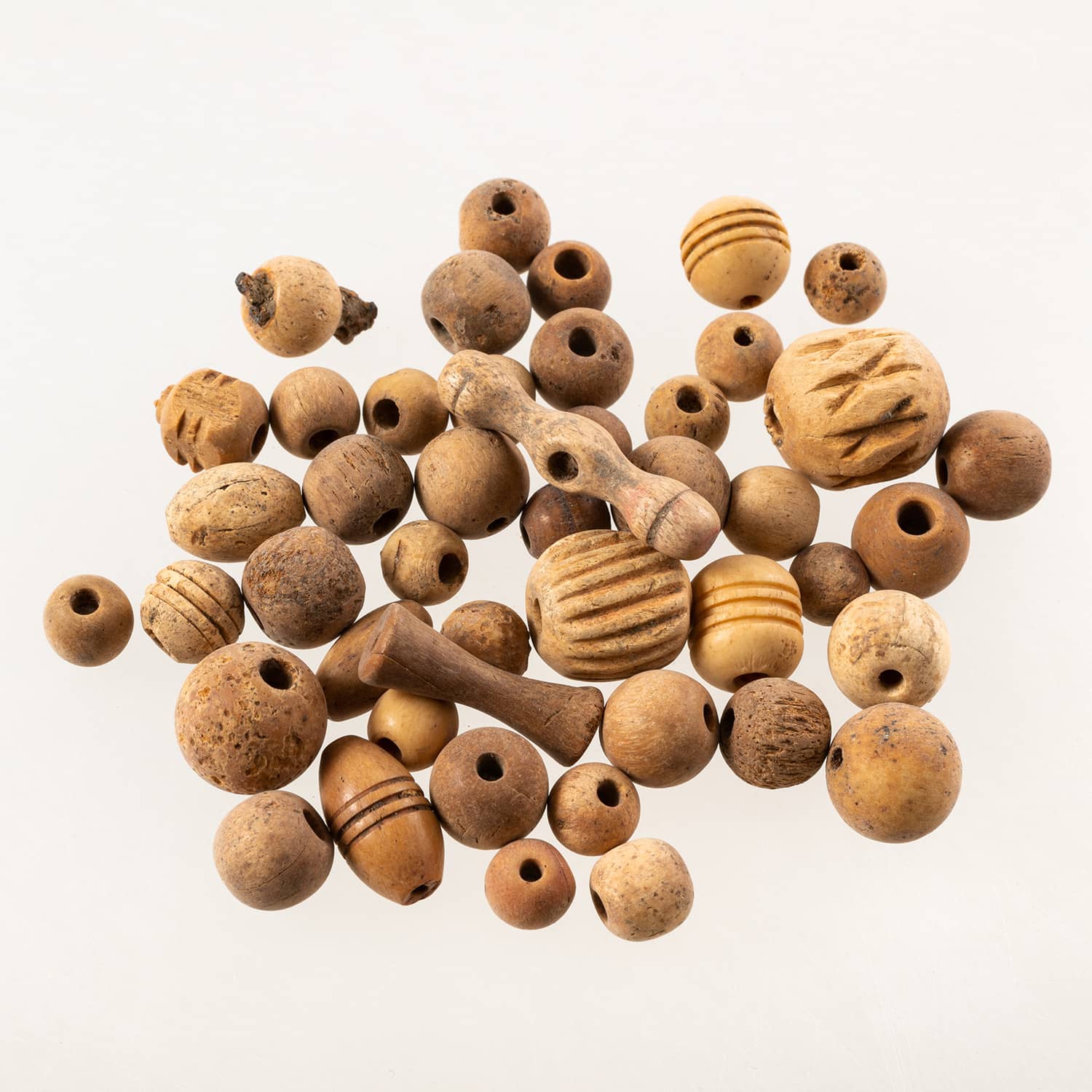
Rijeka, Pul Vele crikve
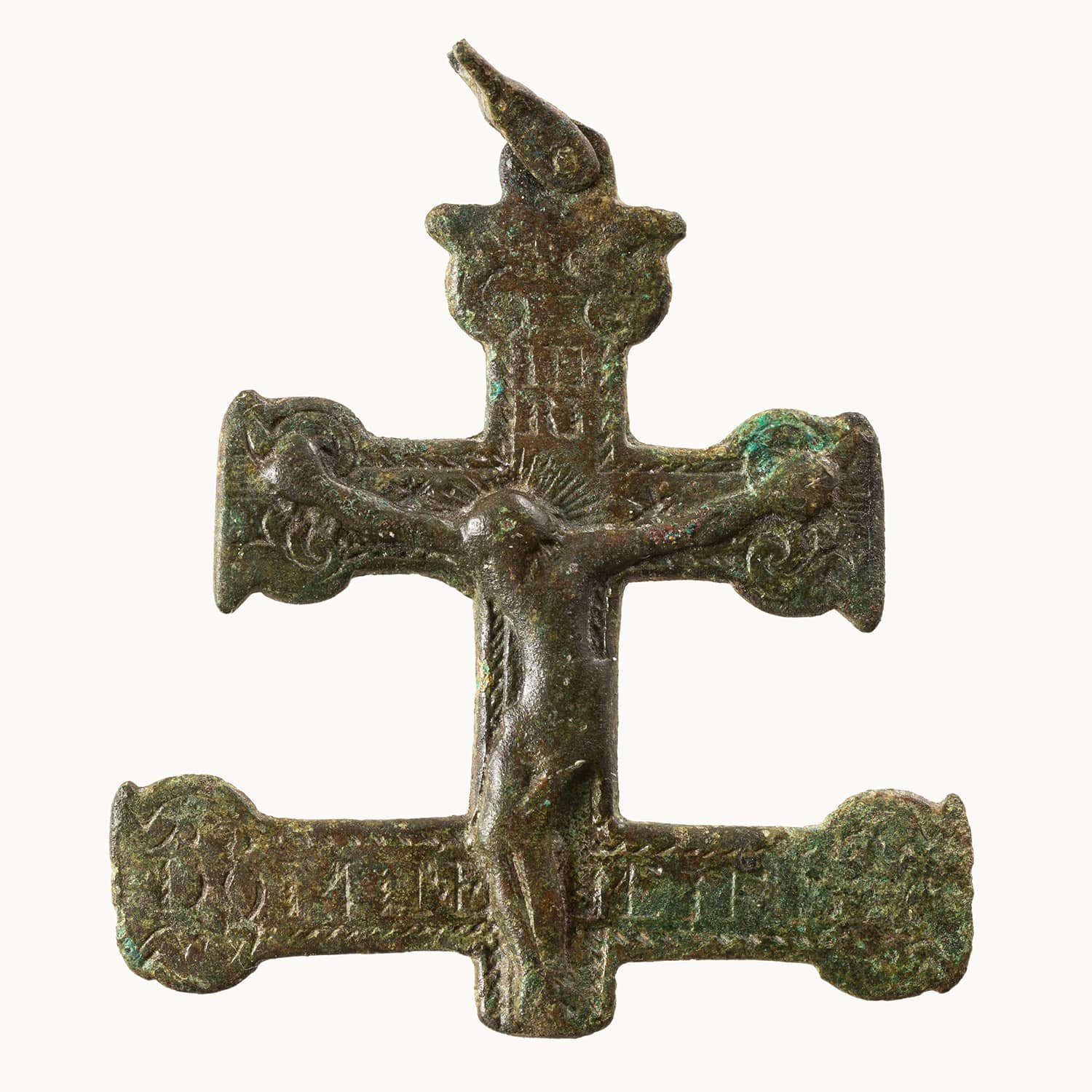
Mošćenice, Portić
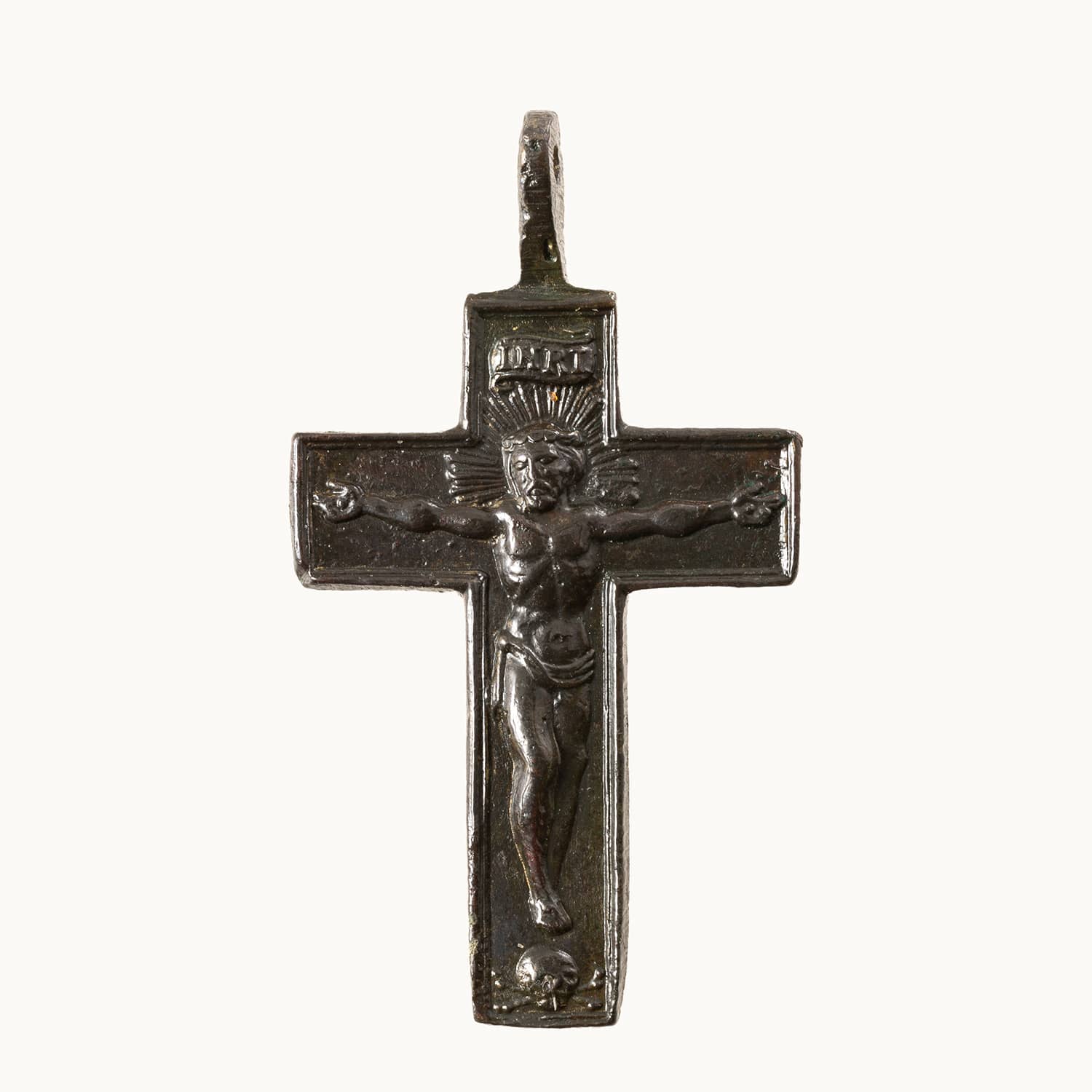
Obverse depicting the crucified Christ, 17th/18th c.
Rijeka, Pul Vele crikve
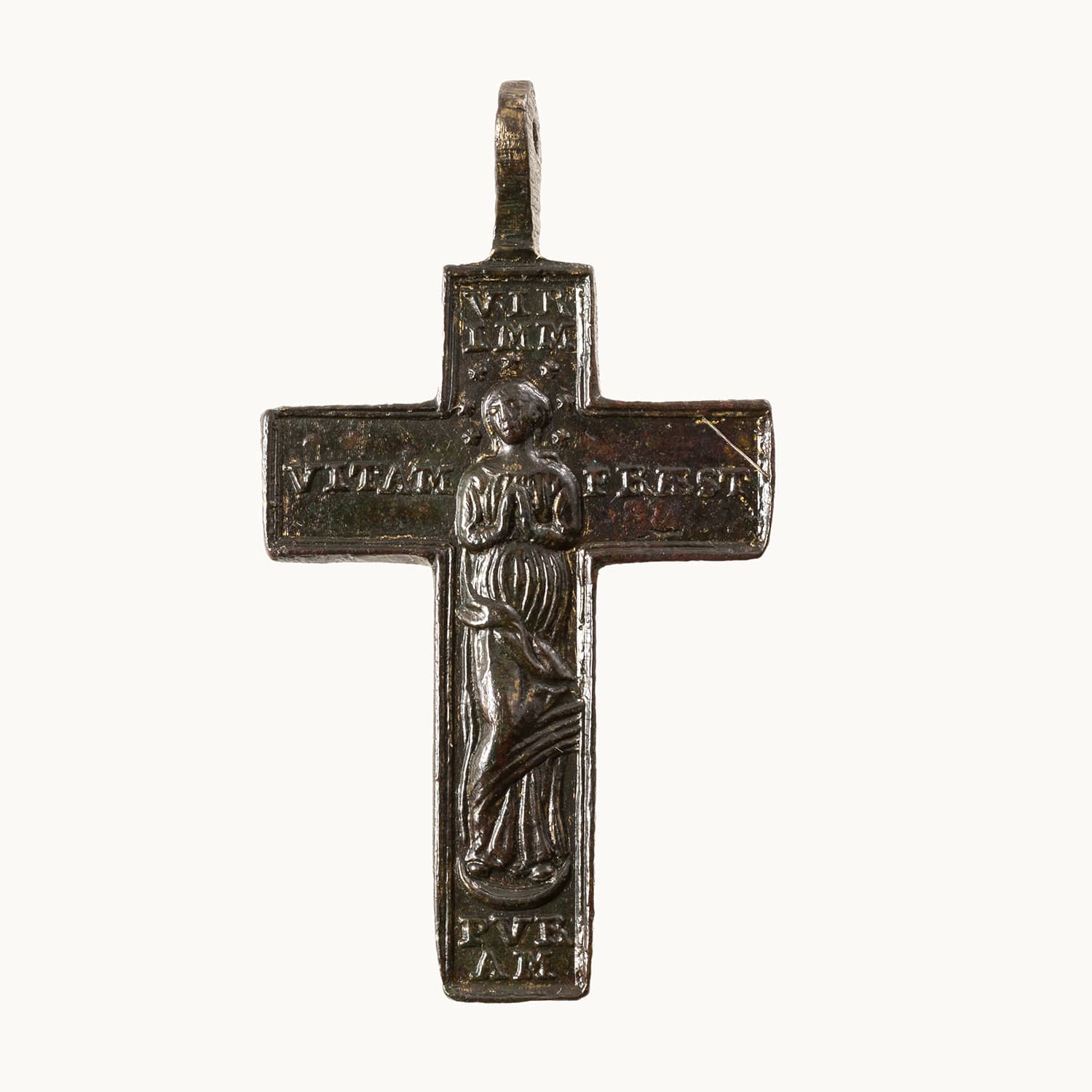
Reverse depicting the Immaculate Virgin Mary, 17th/18th c.
Rijeka, Pul Vele crikve
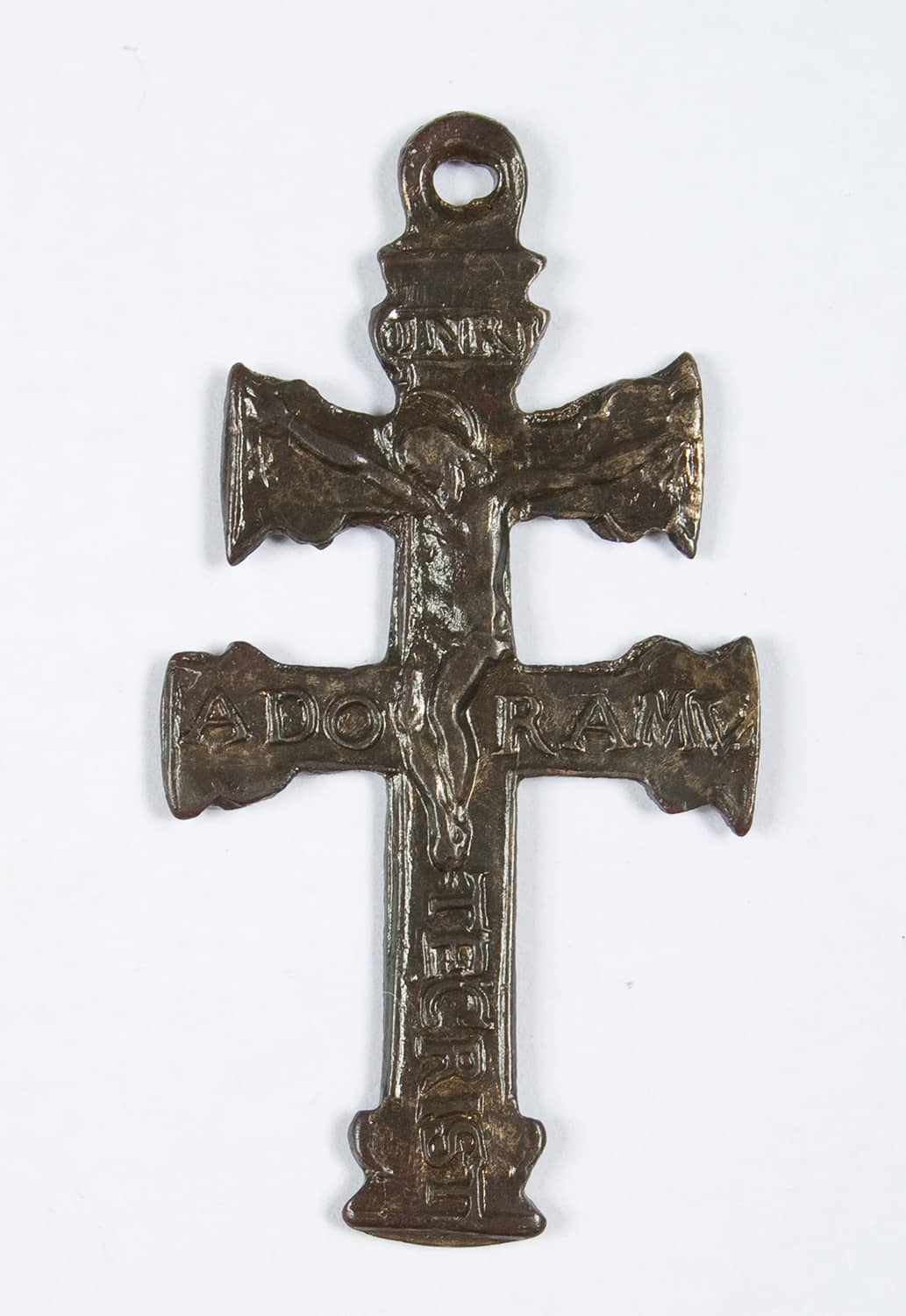
17th c.
Rijeka, Pul Vele crikve
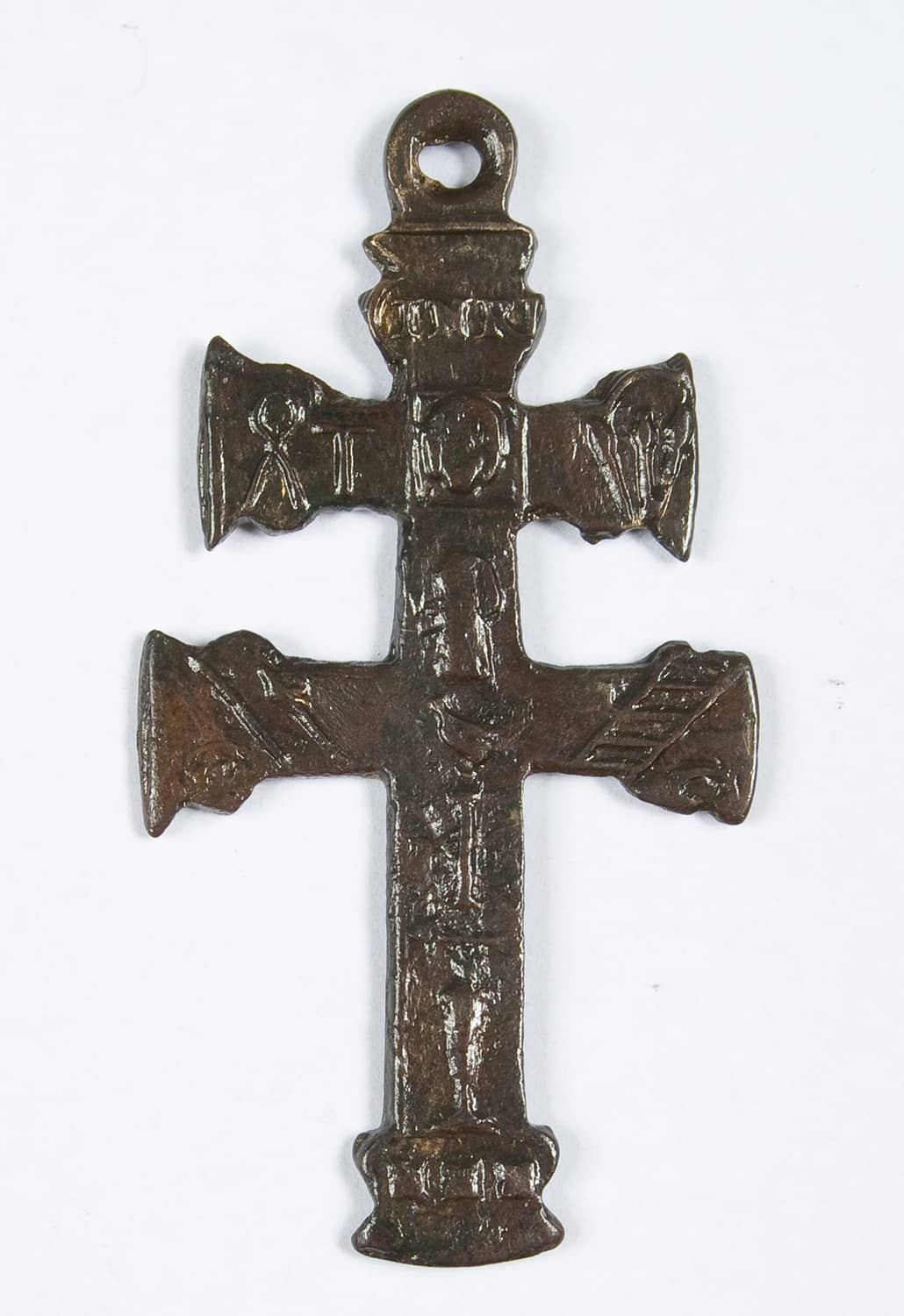
reverse depicting Arma Christi
Rijeka, Pul Vele crikve