
Historical and archaeological context
The fate of the towns of Rijeka and Mošćenice in the Middle Ages and the Early Modern period was almost identical. The towns, fortified with defensive walls, were mentioned in historical sources in the Late Middle Ages, when they were part of the Holy Roman Empire. In the 13th and the 14th centuries they belonged to the Duino feudal family, in the 15th century they were the property of the Walsee family, and in 1466 they were bequeathed to Emperor Ferdinand III of Habsburg. During that period, Rijeka was governed by captains appointed by the rulers. In the 17th century, the religious order of the Society of Jesus arrived in Rijeka, where they reformed the educational and cultural life of the city, with Mošćenice becoming their property.
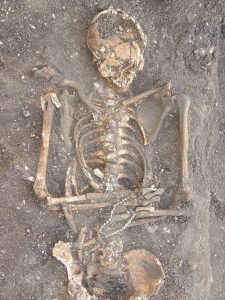
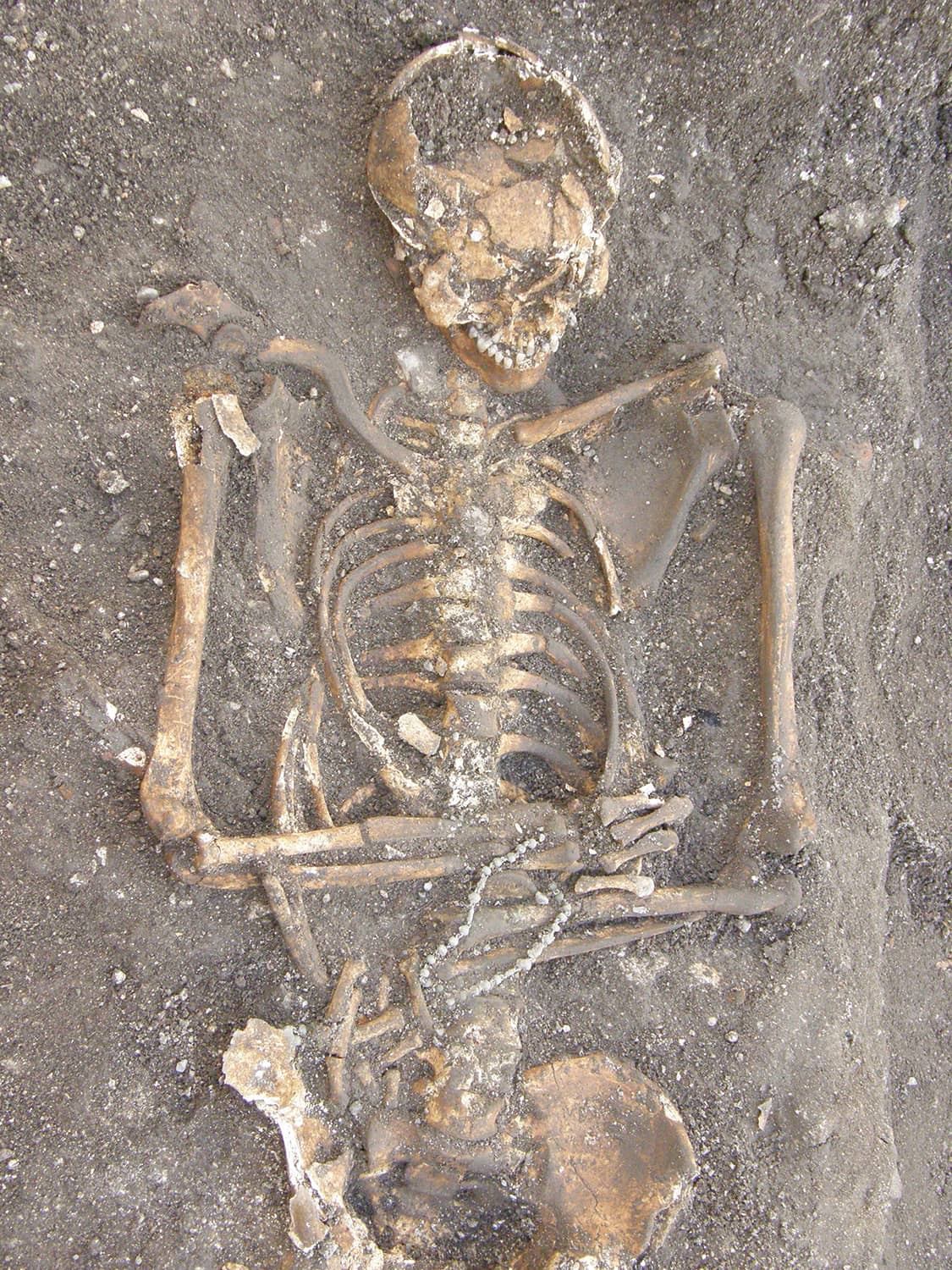
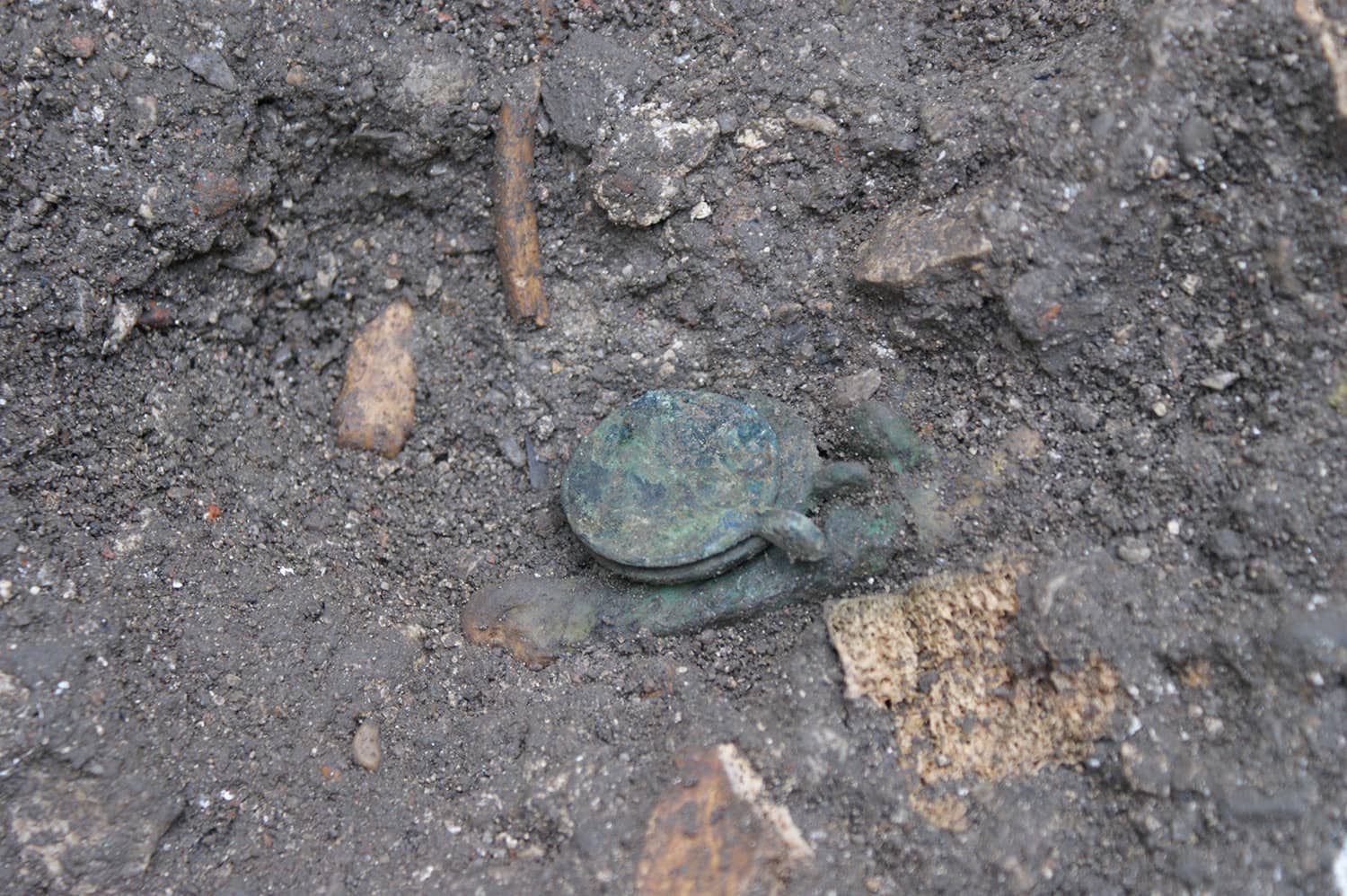
A great number of devotional objects has been acquired by the Archaeological Department of the Museum through rescue excavations carried out at the sites of earlier graveyards situated next to parish churches in Rijeka and Mošćenice. In 2008 and 2009, archaeological research was conducted in Rijeka’s Old Town, at the site of the city cemetery that had been next to the Church of the Assumption of the Blessed Virgin Mary. A total of 153 graves and seven ossuaries were excavated. The graveyard had been used from the 13th century to 1773, when the imperial government of Joseph II decided to prohibit the burial of human remains within the city walls. In 2017, archaeological research was conducted in the centre of Mošćenice, in the area next to St Andrew’s Church. Beneath the Portić scenic spot there is an ossuary, where at least 651 deceased persons were buried. The archaeological findings date from the 17th and 18th centuries.

Postcard, V. Stein, Trieste, 1906
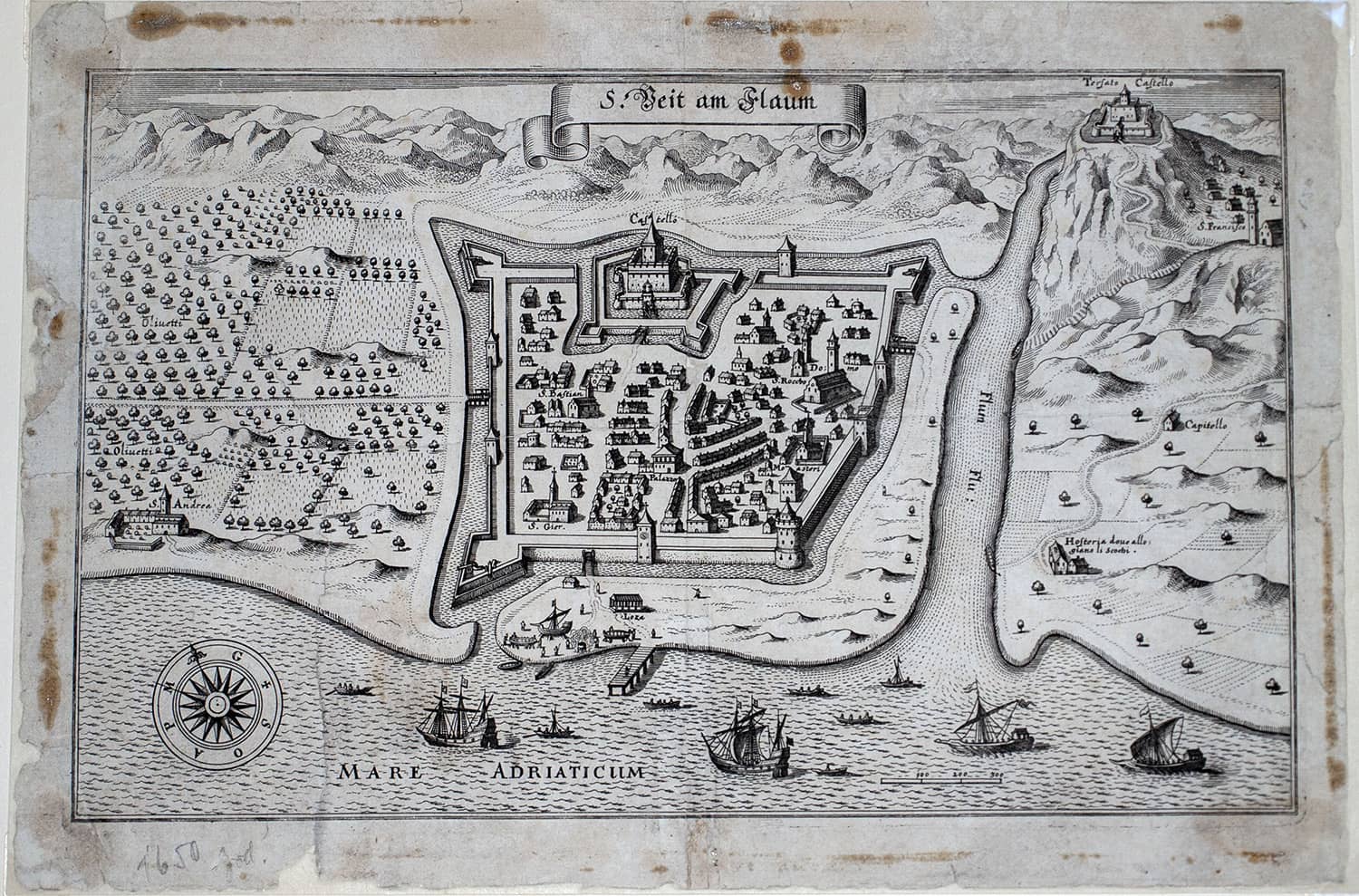
Matthäus Merian st., Topographia Provinciarum Austriacarū, Austriae, Styriae…, Frankfurt am Main, 1649
Paper, copper engraving