
Objects of devotion
Devotional artefacts, or objects of devotion, have been widespread since the 16th century, but their popularity increased enormously in the 17th and 18th centuries. These are objects that encourage and strengthen piety or serve as reminders of religious mysteries. Objects of devotion are devotional medals, medallions, crosses, breverls, rosaries, and holy cards with images of saints, which appeared in later centuries. In the Archaeological Department of the Maritime and History Museum of the Croatian Littoral Rijeka, there are around 700 devotional artefacts acquired by the Museum through archaeological research.
The sudden spread of devotional objects among common people was caused by the destabilisation of the Christian faith in the early 16th century. When Martin Luther posted his ninety-five theses on the door of a parish church in Wittenberg in 1517, proposing a public debate on the way the church was organised as well as on Christian dogmas, he directly attacked the Pope and the entire church organisation of the time, which led to a schism. Since his ideas spread rapidly due to the invention of the printing press, the Catholic Church had to react quickly, and therefore it started the Catholic Reformation (or Renewal). At the Council of Trent (1545 – 1563), the basic structure of the Church was preserved and various Catholic customs were reaffirmed, including pilgrimages and the veneration of Mary, saints and relics. The greatest role in spreading the Catholic Renewal was played by the newly-formed Jesuit order. The Catholic Reformation was meant to put a stop to Protestantism and erase pagan beliefs, but was met with mixed success. Common people’s beliefs about pagan protection from evil and various other troubles merged with the cult of saints and the custom of wearing and carrying devotional medals, breverls and crosses.


Rijeka, Pul Vele crikve

Mošćenice, Portić

Devotional medal, obverse, 17th/18th c.
Rijeka, Pul Vele crikve

Rijeka, Pul Vele crikve

Devotional medal, reverse, 17th/18th c.
Rijeka, Pul Vele crikve

Devotional medal, obverse, 17th c.
Rijeka, Pul Vele crikve

Rijeka, Pul Vele crikve

Rijeka, Pul Vele crikve

Devotional medal, obverse, 17th/18th c.
Rijeka, Pul Vele crikve
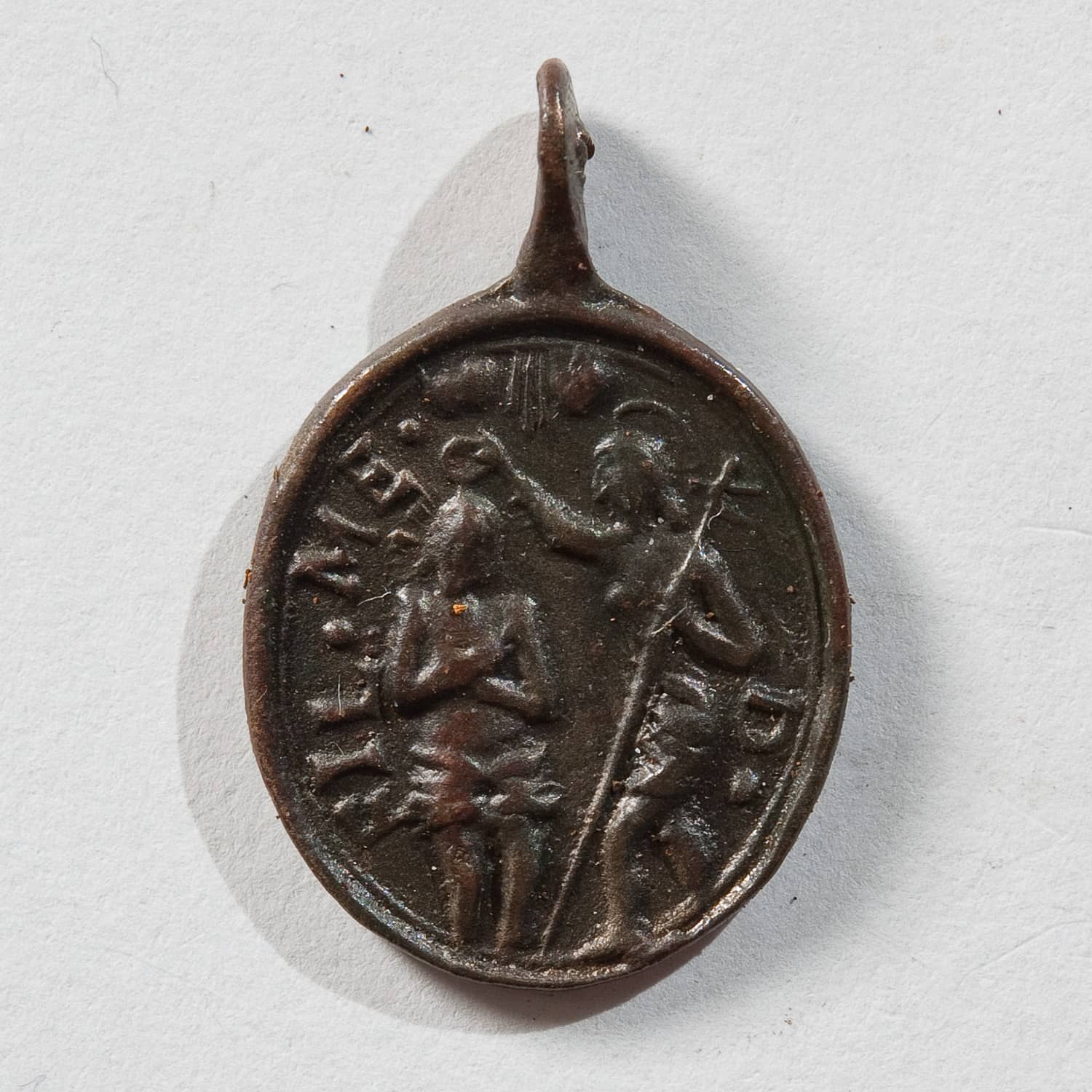
Devotional medal, reverse, 17th c.
Rijeka, Pul Vele crikve